




Can the workflow stay connected?
Conveyor transport connects feeding to discharge after processing.
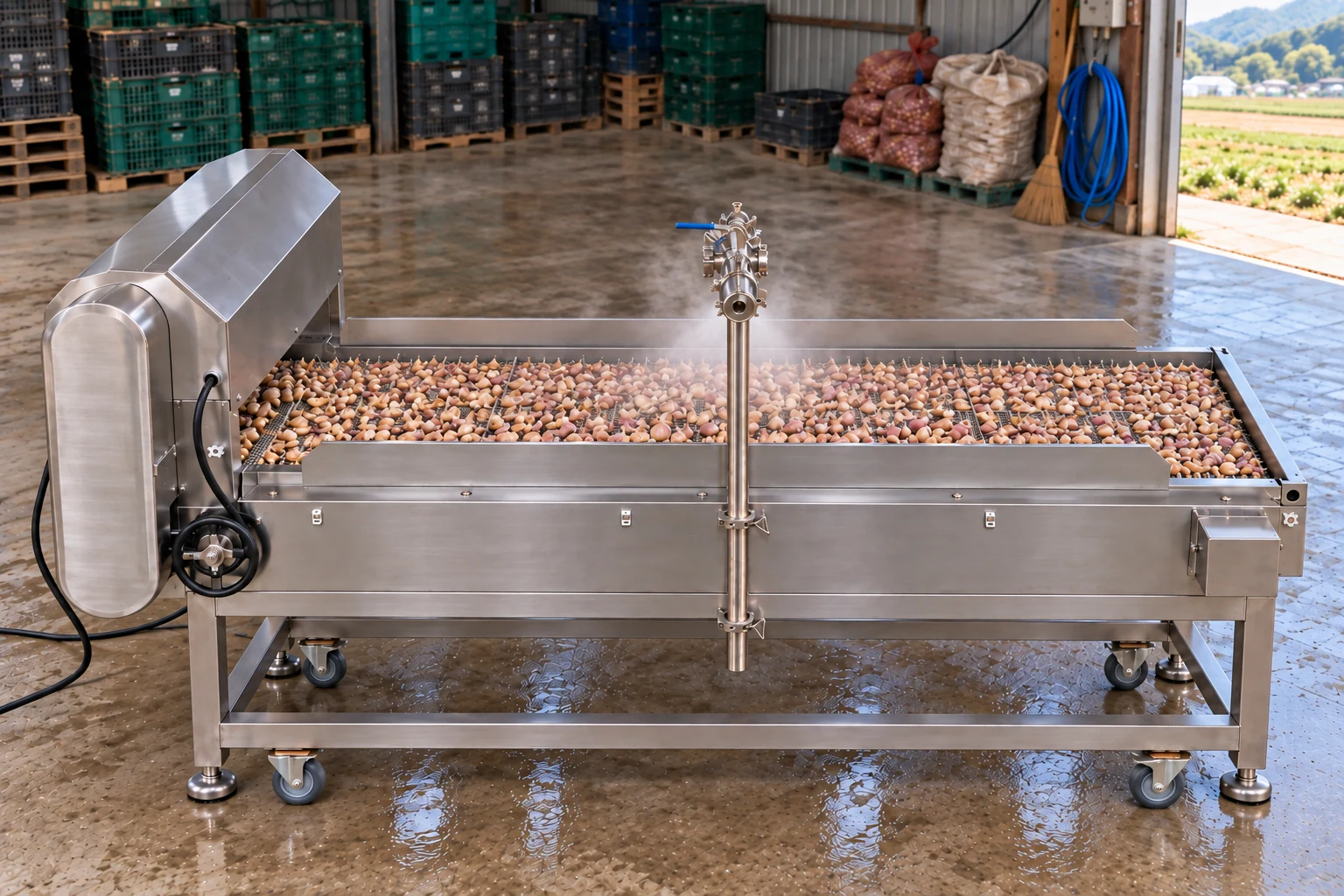
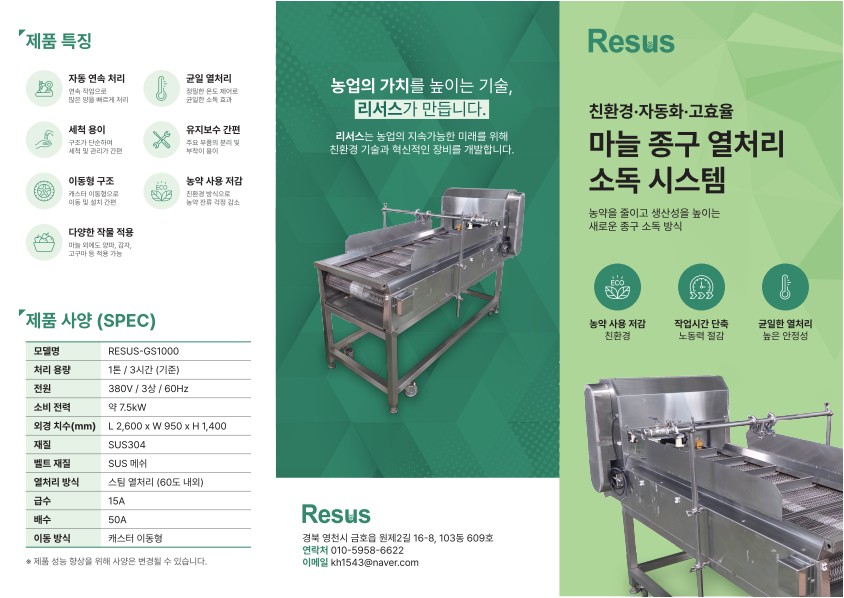
Automatic conveying connects washing and spraying, heat treatment, drainage and discharge.
We look at the stages of seed-clove handling as one workflow. Continuous conveying helps connect processing and maintenance considerations.
Conveyor transport connects feeding to discharge after processing.
Seed cloves pass through the spray structure and steam-treatment zone as processing continues.
The stainless-steel mesh belt and drainage structure support convenient cleaning and maintenance.
Select a process to explore the product structure and processing flow.
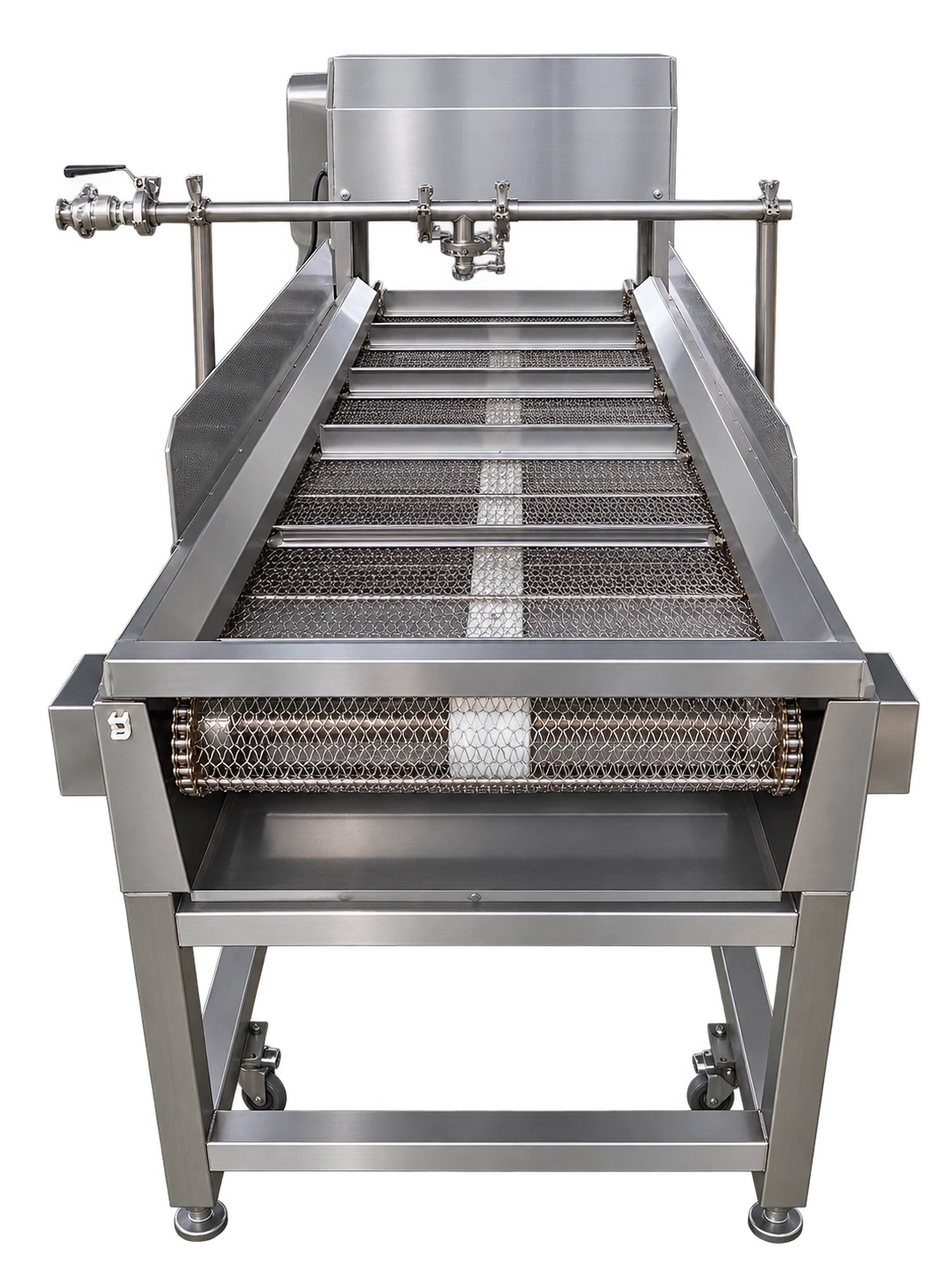
After seed cloves are loaded, the conveyor carries them in the working direction. The structure guides them through each zone, connecting movement between processes.
Feeding · Continuous conveying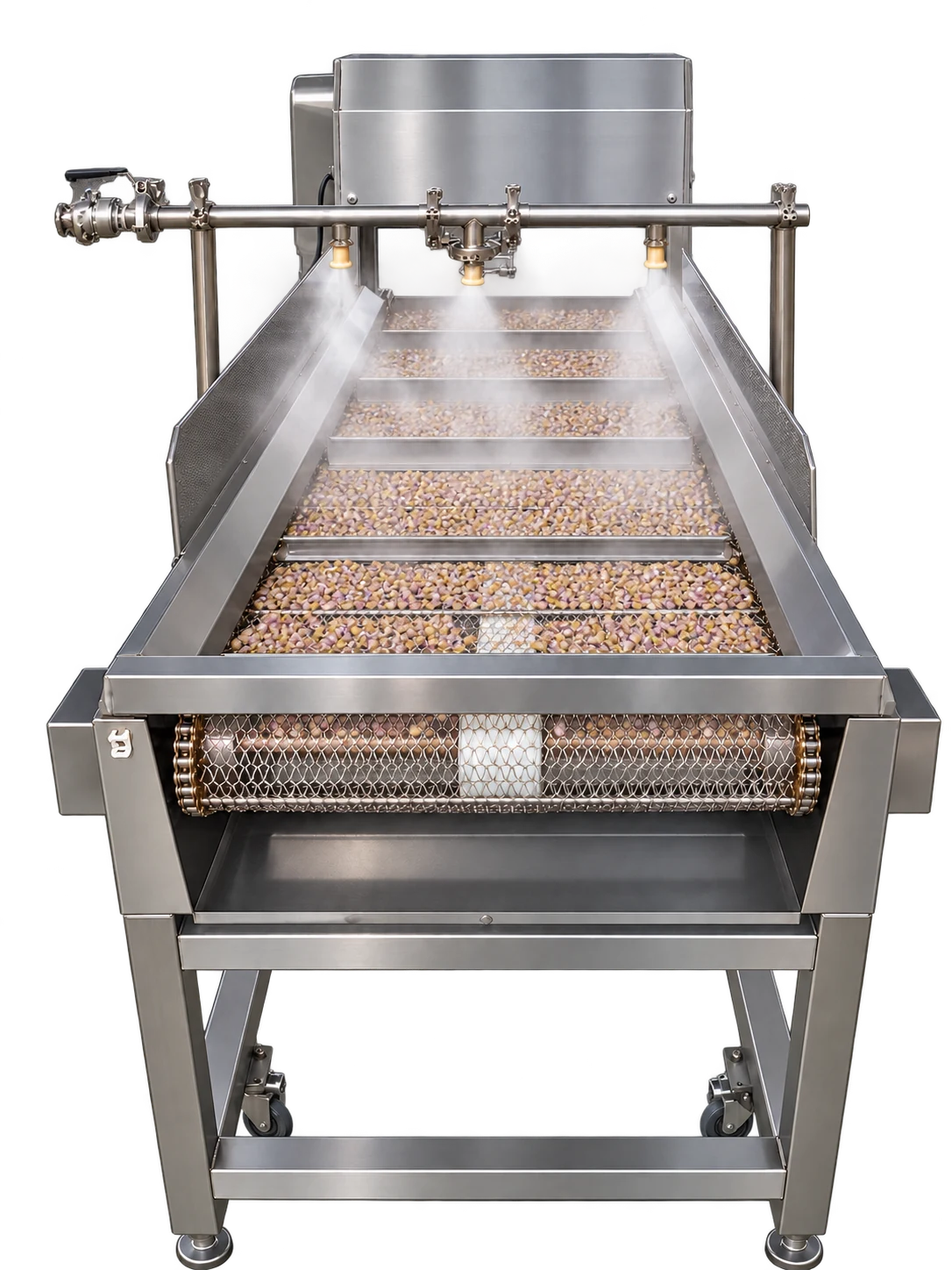
Seed-clove processing continues through the overhead spray structure and steam-treatment zone. Conditions are reviewed for the crop and seed-clove condition.
Washing and spraying · Steam treatment
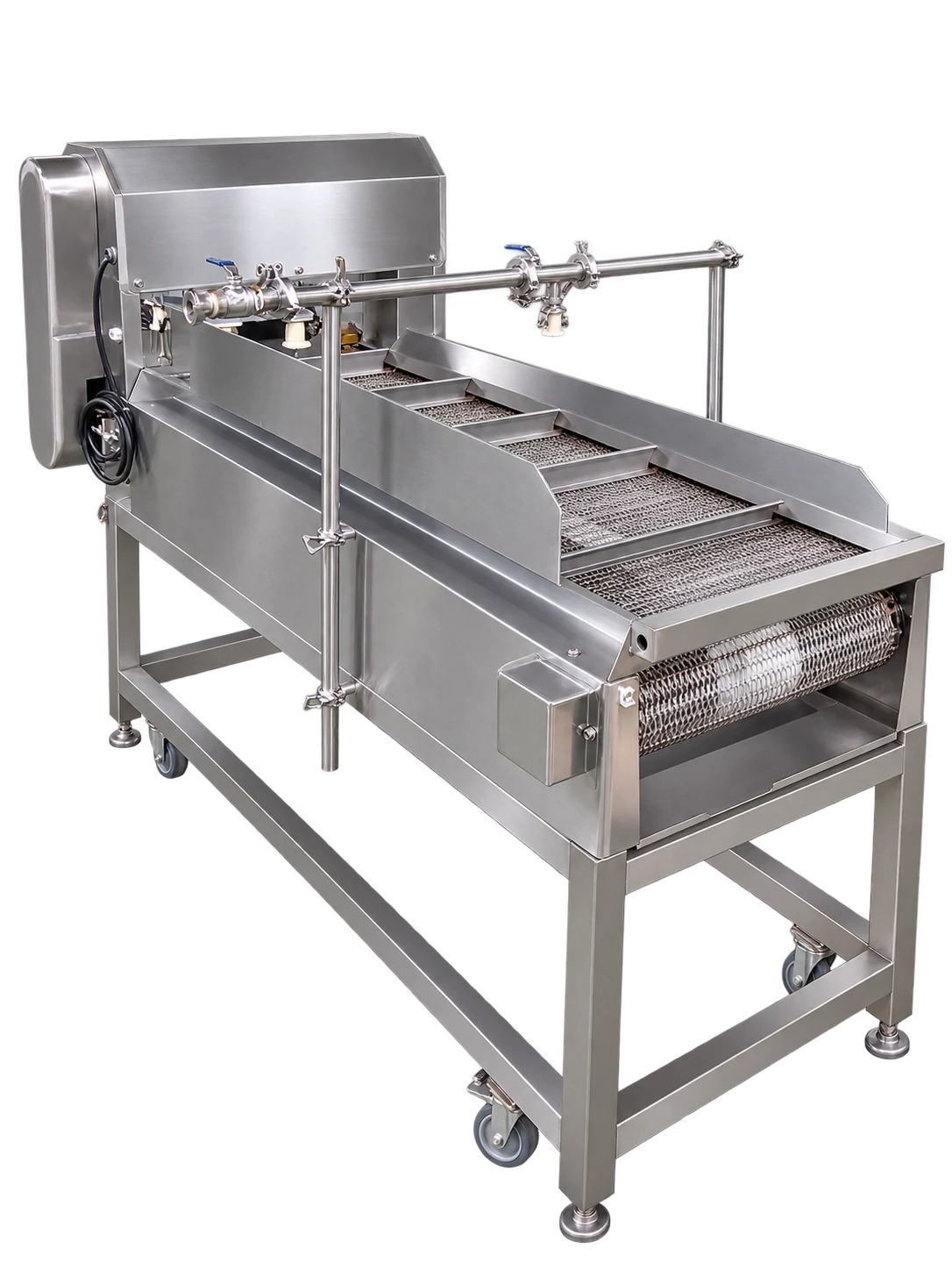
Water from processing leaves through the drainage structure, while seed cloves move towards the conveyor end. The discharge flow is designed to connect with the next task.
Drainage · Automatic dischargeTemperature, treatment time, conveying speed and other conditions are confirmed through consultation for the seed-clove condition, feeding method and site environment.
Materials and structure are chosen with daily operation, cleaning and maintenance in mind.
A body material chosen with cleaning and maintenance in mind.
A belt structure that considers conveying and drainage together.
A conveyor system that connects movement between processes.
We will review a suitable approach together, based on your crop, required throughput and installation space.
Product catalog · Korean
1 / 2